
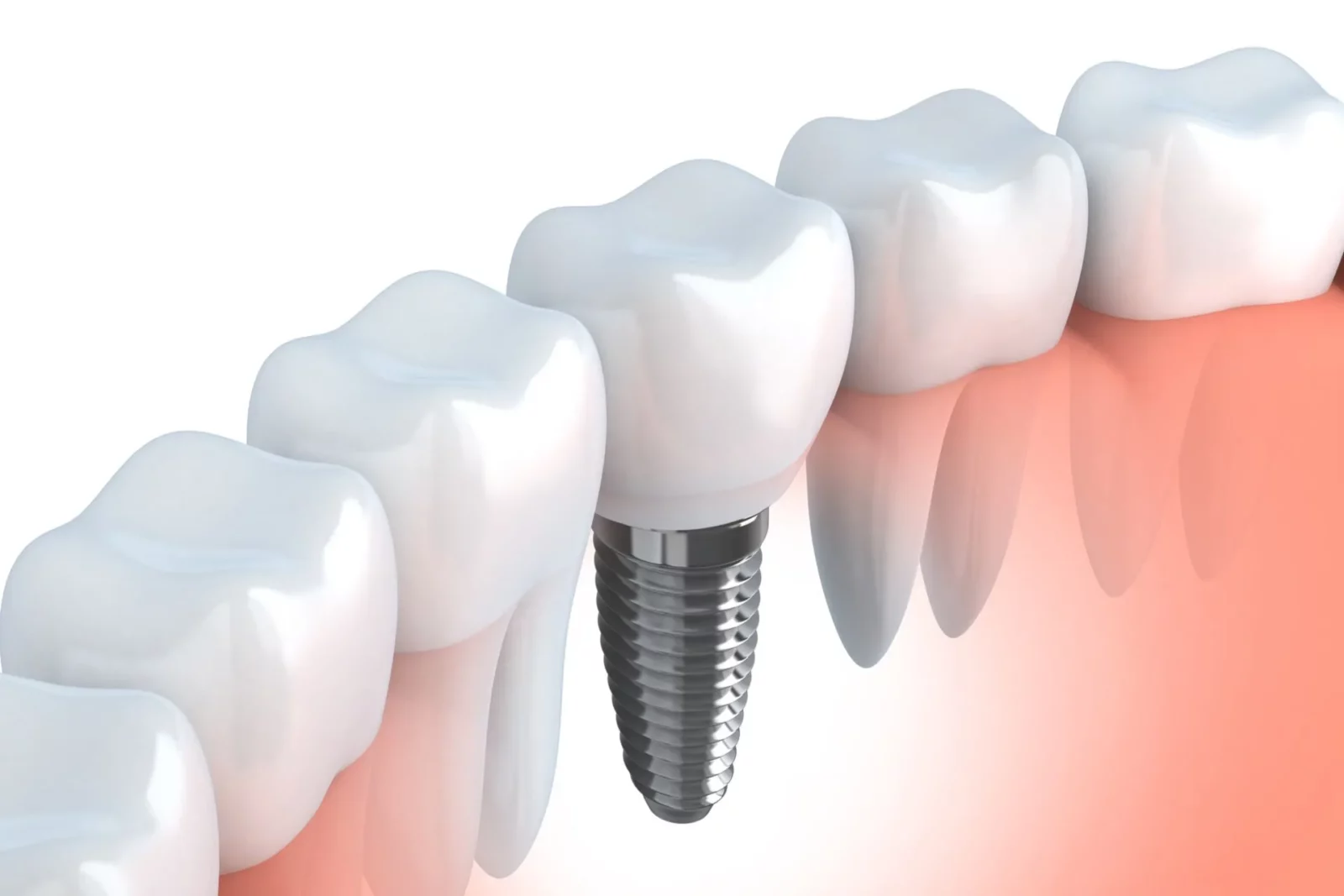
Dental implants are surgical-grade root devices that support permanent tooth prosthetics that are manufactured to last a lifetime. These artificial roots are anchored in the bone beneath the gums where they become fused into the jaw. A crown is mounted atop the implant for a long-lasting and natural looking smile. Many dentists and patients prefer dental implants because they offer the same function as natural teeth and also help prevent bone atrophy in the jaw. Dental implants may be used to replace a single missing or damaged tooth or to restore an entire smile.
Did you know…
that approximately 30 million people live with no natural teeth in one or both jaws? But more and more dental patients are opting for dental implants as a means of tooth replacement. The American Academy of Implant Dentistry reports that 3 million people currently have dental implants – a number that is rapidly growing by about 500,000 per year. Modern titanium implants were first developed in the 1950’s, but archeologists have determined that ancient Egyptians and Mayans were the first cultures to implant artificial teeth.
The majority of American adults over age 35 are missing, at least, one natural tooth? What’s more is that 1 in 4 seniors age 74 and older are missing all of their permanent teeth. Although dentures and bridges are a prosthetic option, they do not provide the same benefits available with dental implants. Implant dentistry prevents others from recognizing teeth as ‘false,’ and it also prevents the jawbone from disintegrating and any remaining natural teeth from shifting.
Frequently Asked Questions
Am I a candidate for dental implants?
You may be a candidate for dental implants if you are missing one or more teeth. You’ll need a complete surgical consultation with x-rays to determine whether you are in good health and have adequate bone structure to support dental implants. In some cases where the bone is not dense enough to support an implant, surgical bone grafting may make it possible to support one in the future. It is also important to ensure you do not have any existing health conditions, such as gum disease, that could cause complications with your implants.
What should I expect during a dental implant procedure?
If your dentist determines that dental implants are right for you, expect the procedure to require multiple visits over the course of several months. The first treatment visit is the one when implants will be surgically placed within your jawbone. You’ll be anesthetized during the process to ensure your comfort. Once the implants are in place and healed with the surrounding bone, an impression will be taken and used to form crowns or dentures that will be secured to implant abutments above the gum line. The implants will need to heal for a period of 6 to 9 months before you can return to have your final crowns or dentures placed.
What should I expect during the recovery period?
Dental implant placement is a surgical procedure that requires a period of recovery. During this time, it is common to experience some swelling and soreness, as well as bleeding and minor bruising near the surgical site. Your dentist will recommend eating only soft foods during the first several days following implant surgery. It is also important to follow all instructions for post-surgical care, including cleaning the surgical site and using any medications as prescribed. Be sure to contact your dentist if you experience any fever or discomfort that worsens after a few days.